


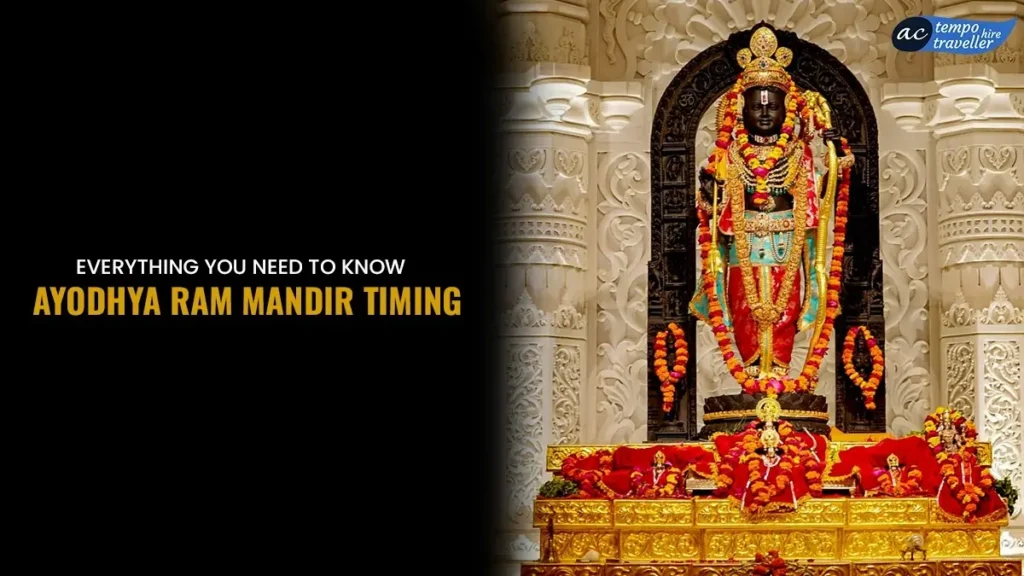
Visiting the Ayodhya Ram Mandir is a very special and meaningful moment in the life journey of every devotee. Since its holy inauguration, the temple management has added many better systems and organised arrangements to handle the lakhs of pilgrims who come to the temple every month.
This guide shares the latest and most useful details for planning your 2026 visit, including timings, entry guidelines, and helpful travel tips, so that your spiritual trip becomes smooth and comfortable.
Ayodhya Ram Mandir Timing: Basic Information You Should Know
The temple follows a well-planned and disciplined daily schedule. Knowing the difference between Darshan (seeing the deity) and Aarti (prayer ceremony) is the first important step while preparing for your visit.
| Event | Approximate Timing | Access Type |
|---|---|---|
| Mangala Aarti | 4:00 AM – 4:30 AM | Pass Required (Limited) |
| Shringar Aarti | 6:30 AM | Pass Required (Limited) |
| Morning Darshan | 7:00 AM – 12:00 PM | Open to General Public |
| Midday Break | 12:00 PM – 2:00 PM | Temple Closed |
| Afternoon Darshan | 2:00 PM – 7:00 PM | Open to General Public |
| Sandhya Aarti | 7:00 PM – 7:30 PM | Pass Required (Limited) |
| Night Darshan | 7:30 PM – 9:00 PM | Open to General Public |
| Shayan Aarti | 10:00 PM | Pass Required (Limited) |
Morning Darshan: Start Your Day with Divine Blessings
The early morning hours are widely considered the best time for a peaceful visit.
The Experience
The temple gates open for general devotees at 7:00 AM. If you arrive by 6:30 AM, you can often complete your visit within 60 to 90 minutes. The air is cooler, and the atmosphere is significantly calmer than the midday rush.
Morning Schedule Breakdown
4:30 AM: The Mangala Aarti wakes the deity. This is a highly exclusive ritual with very limited entry passes.
6:30 AM: The Shringar Aarti takes place as the deity is adorned.
7:00 AM – 11:00 AM: This is the “golden window” for general darshan. Most local devotees and early travelers visit during this time.
Plan your visit during the morning Ayodhya Ram Mandir timing if you want a calm and devotional atmosphere. The early hours are peaceful and less crowded, which helps devotees focus on prayer and have a smooth darshan experience.
Afternoon Break: Why the Temple Closes Midday
A common mistake for first-time visitors is arriving at the gates at noon.
The temple follows the tradition of Pustimarg and other Vedic customs where the deity rests. The doors close strictly from 12:00 PM to 2:00 PM. During this time, the Bhog (food offering) is presented privately to Ram Lalla.
Pro-Tip: Use this two-hour window to explore nearby sites like Hanuman Garhi (just 1 km away) or to have a traditional Sattvik lunch at a local bhojanalaya.
Knowing the afternoon Ayodhya Ram Mandir timing helps you manage your schedule easily and avoid waiting so you can plan your day in a better way.
Evening Darshan: The Spiritual Peak
As the sun sets over the Saryu River, the temple complex transforms. The evening session from 2:00 PM to 9:00 PM is vibrant but can be much more crowded.
Ayodhya Ram Mandir Timing
7:00 PM: The Sandhya Aarti (Evening Aarti) begins. The sound of bells, chants, and the glow of traditional lamps create a powerful spiritual energy.
9:00 PM: The final entry for general darshan usually stops.
10:00 PM: The Shayan Aarti marks the end of the day before the deity retires for the night.
Plan your visit during the evening Ayodhya Ram Mandir timing to feel the devotional atmosphere and enjoy a peaceful darshan experience.
How to Book Aarti and Sugam Darshan Passes

While general darshan is free and requires only standing in the queue, special access requires pre-planning.
Free Sugam Darshan E-Pass
The Trust has introduced the Free Sugam Darshan E-Pass for 2026. This allows you to book a specific time slot online to avoid the long general queues.
Where to Book: Only via the official website: online.srjbtkshetra.org.
When to Book: Slots typically open 15 days in advance. They fill up almost instantly, often within minutes of release (usually at midnight).
Group Size: One pass can accommodate up to 8 people.
Aarti Passes
Attending an Aarti ceremony requires a separate pass. These are also free but highly regulated.
Requirement: You must provide a valid government ID (Aadhaar for Indians, Passport for foreigners).
Reporting: You must reach the designated entry point at least 30–45 minutes before the Aarti begins.
Key Points to Remember: Security and Rules
The Ayodhya Ram Mandir has some of the strictest security protocols in India. To save time, do not carry the following:
Electronics: Mobile phones, smartwatches, cameras, and power banks are completely prohibited inside the main temple.
Leather Goods: Avoid wearing leather belts or carrying leather purses.
Offerings: Unlike other temples, you cannot take flowers, garlands, or outside prasad inside the sanctum.
Locker Facilities: Free lockers (Public Convenience Centers) are available, but queues to deposit and retrieve items can take 30–45 minutes. It is best to leave your phone and bags in your hotel or vehicle.
Best Time to Visit: Seasons and Festivals
The experience changes drastically depending on when you travel.
Recommended Seasons
October to March (Peak Season): This is the ideal time. Temperatures range from 10°C to 25°C, making the long wait in queues manageable.
April to June (Summer): Temperatures can exceed 40°C. If you visit now, aim for the 7:00 AM slot or the late evening.
July to September (Monsoon): The city looks beautiful, but rain can make the marble floors slippery and travel slightly more difficult.
Major Festivals to Note
If you visit during these times, expect the city to be packed with millions of people. Security will be tighter, and wait times can exceed 5–6 hours.
Ram Navami (March/April): The biggest celebration in Ayodhya.
Diwali (October/November): Famous for the “Deepotsav,” where millions of lamps are lit on the Saryu ghats.
Kartik Purnima: A massive day for holy dips in the Saryu River.
Important Festival Dates (Feb – March 2026)
If your travel aligns with these dates, expect extremely large crowds and higher security. It is highly recommended to book your Aarti or Sugam Darshan passes 15 days in advance for these specific days.
Maha Shivratri: February 15, 2026 (Sunday)
Impact: Significant crowds as devotees often visit both Shiva and Ram temples.
Holika Dahan: March 3, 2026 (Tuesday)
Holi: March 4, 2026 (Wednesday)
Impact: The city will be very festive, but many shops and transport options may have limited hours.
Chaitra Navratri Starts: March 19, 2026
Ram Navami: March 26, 2026 (Thursday)
Impact: This is the most crowded day of the year in Ayodhya. The “Surya Tilak” ritual occurs at noon. Expect wait times of 5–8 hours if you do not have a pass.
Travel Advice for 2026
Avoid the Weekend of Feb 14-15: With Maha Shivratri falling on a Sunday, the crowd will be triple the usual size. If you want a peaceful visit, try February 17 or 18.
Ram Navami Planning: If you plan to be there on March 26, ensure your hotel is within walking distance of the temple, as vehicles are often banned from the city center during this festival.
Weather Check: February is pleasant (15°C – 25°C), but by late March, it begins to get hot. Carry a water bottle and a hat if you are visiting during the Ram Navami period.
How to Reach ayodhya?
Reaching Ayodhya in 2026 is convenient as the city is now a major global travel hub. You can choose from three main modes of transport:
By Air
The Maharishi Valmiki International Airport (AYJ) is the most efficient gateway, located approximately 10–12 km from the Ram Mandir. A taxi or app-based cab from the airport takes about 25–30 minutes to reach the temple area. Alternatively, Lucknow Airport (LKO) is 140 km away, with a travel time of 3 hours by road.
By Train
Ayodhya is served by two major stations:
Ayodhya Dham Junction (Nearest): Located just 1.2 km to 2 km from the temple. You can easily reach the Mandir in 10 minutes via e-rickshaw or even by walking.
Ayodhya Cantt (formerly Faizabad Jn): Situated about 8–10 km from the temple. Plenty of autos and taxis are available, taking roughly 20–25 minutes.
By Road
The Ayodhya Dham Bus Station is roughly 2 km from the temple. UPSRTC operates regular AC and non-AC buses from Lucknow, Varanasi, and Gorakhpur. If you want to visit nearby places in Ayodhya we provide Tempo Traveller services in Ayodhya and across all India for comfortable group travel.
Why Trust This Guide?
Information regarding the Ram Mandir changes as construction reaches its final phases in 2026. This guide is based on the latest directives from the **Shri Ram Janmabhoomi Teerth Kshetra Trust. We prioritize official rules over local myths to ensure you don’t face rejection at the security gates.
Final Words: Make the Most of Your Spiritual Journey with Ac Tempo Traveller Hire
To make your visit to the Ayodhya Ram Mandir smooth and peaceful, focus on simple planning with Ac Tempo Traveller Hire. The best days to visit are Tuesday, Wednesday, or Thursday because weekends are very crowded. Try to arrive at the temple gates by 6:30 AM to beat the heat and the longest lines. Remember that you cannot take mobile phones, smartwatches, or any electronics inside, so it is much faster to leave them at your hotel. Wear comfortable cotton Indian clothes and carry a printed copy of your ID, as digital versions on a phone won’t work if your phone is in a locker. Since you will walk about 2 kilometers, drink plenty of water before you join the queue. Following these steps helps you focus on your prayers instead of the crowd.