


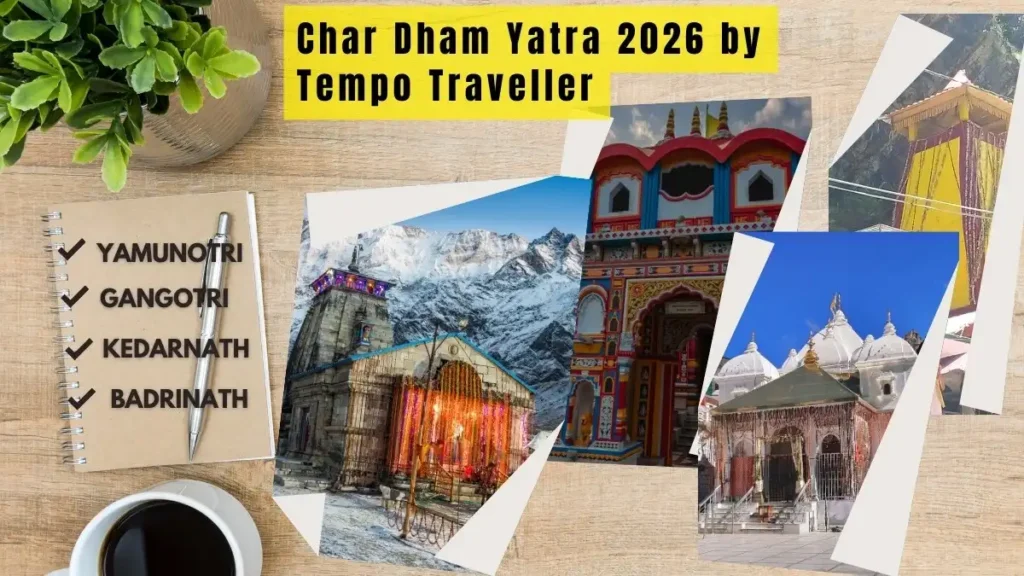
Planning a Char Dham Yatra from Delhi is much more than just arranging travel and beginning your journey. It demands knowing the hills, climate conditions, road difficulties and the sacred importance of the entire route. Most people do not realize that the distance from Delhi to the Char Dham circuit is more than 1400 kilometres and the journey takes you through sharp Himalayan curves, deep valleys and high-altitude zones. The traditional sequence of the Yatra includes Yamunotri, Gangotri, Kedarnath and Badrinath. This order helps the body adapt to altitude gradually. If the order is disturbed, many travellers experience fatigue or sickness. People often believe that booking a package is enough, but without knowledge of the route, weather, road conditions and essential preparations, the trip may become stressful.
Char Dham Opening and Closing Dates 2026
The Char Dham Yatra requires proper planning because the four shrines remain open for only six months due to snow and harsh Himalayan weather. The opening dates are declared every year on Basant Panchami and Maha Shivratri, while the closing dates fall near Diwali and Bhai Dooj.
The Yatra traditionally begins from Yamunotri, then moves to Gangotri, follows to Kedarnath and ends at Badrinath. The temples usually open in late April or early May and close in late October or early November. If you travel too early, you may face cold winds and occasional snowfall. If you travel near the closing weeks, the roads may become unpredictable because of changing weather.
| Temple | Opening Date (Tentative) | Closing Date (Tentative) |
| Yamunotri | 30 April 2026 | 2 November 2026 |
| Gangotri | 30 April 2026 | 2 November 2026 |
| Kedarnath | 2 May 2026 | 3 November 2026 |
| Badrinath | 4 May 2026 | 9 November 2026 |
How to Reach Char Dham from Delhi?
By Helicopter
Helicopter travel is the quickest way to begin the Yatra. The nearest airport is Jolly Grant Airport, Dehradun, about 285 km from Yamunotri. From the airport, you can take a taxi or bus to Uttarkashi or Barkot. Another option is using helicopter services from Sahastradhara Helipad in Dehradun. Complete Char Dham helicopter packages start at around ₹1.7 lakh per person. As the number of seats is limited, you must complete reservations months in advance. Helicopter services reduce travel time, but weather-related delays are common.
By Train
Train travel is budget-friendly, but there is no direct railway connection to the four shrines. The closest major stations are Haridwar, Rishikesh and Dehradun. Haridwar has excellent connectivity with Delhi through trains like Shatabdi Express, Jan Shatabdi and Mussoorie Express.
Rishikesh Railway Station remains another choice, but provides limited services. Dehradun Railway Station is convenient for those beginning the Yatra towards Yamunotri or Gangotri. After reaching any of these stations, your journey continues by road.
By Road
Travelling by road is the most common way to complete the Char Dham pilgrimage. The usual route begins from Delhi to Haridwar or Rishikesh and then continues towards the four shrines in the traditional sequence. Road conditions change frequently due to landslides, ongoing construction and heavy traffic in peak months.
For group travel, an Urbania Tempo Traveller from Actempotravellerhire is one of the most comfortable options. The approximate cost for a Tempo Traveller from Delhi to the complete Yatra ranges from ₹90,000 to ₹1,20,000, depending on season and vehicle size. It is wise to begin your journey early in the morning to avoid traffic and to travel on weekdays to reduce the crowd rush.
Chardham Yatra Fare by Tempo Traveller
The fare depends on the vehicle variant and total distance. The Travellers bus usually cost ₹90,000–₹1,20,000 for the complete Chardham Yatra. The fare depends on the Traveller type and total journey distance. AC Tempo Travellers typically fall between ₹750–₹1,050 per km for the complete Chardham Yatra. All rates are open with no hidden fees.
| Seating Capacity /Variant | Driver Allowance(₹/Day) | 12-day Chardham Yatra from Delhi |
| 9 Seater Traveller | ₹600 | ₹90,000 |
| 12 Seater Traveller | ₹600 | ₹95,000 |
| 16 Seater Traveller | ₹600 | ₹1,05,000 |
| 20 Seater Traveller | ₹600 | ₹1,20,000 |
| Maharaja Traveller | ₹700 | ₹1,05,000 |
| Urbania Traveller | ₹700 | ₹1,20,000 |
Additional Fare Information
Start & End KM: Counted from the location where you board in Delhi to the place where you get dropped in Delhi.
Driver Timing: 5:00 AM – 11:00 PM each day.
Payment: Net banking or Cash is accepted.
Fuel: Already included in the trip fare.
GST: 5% extra as per government norms.
AC Rule: AC may remain off when driving through steep uphill roads.
Custom Packages: Call our team for crafted multi-day or round-trip travel solutions.
Itinerary for Char Dham Yatra from Delhi

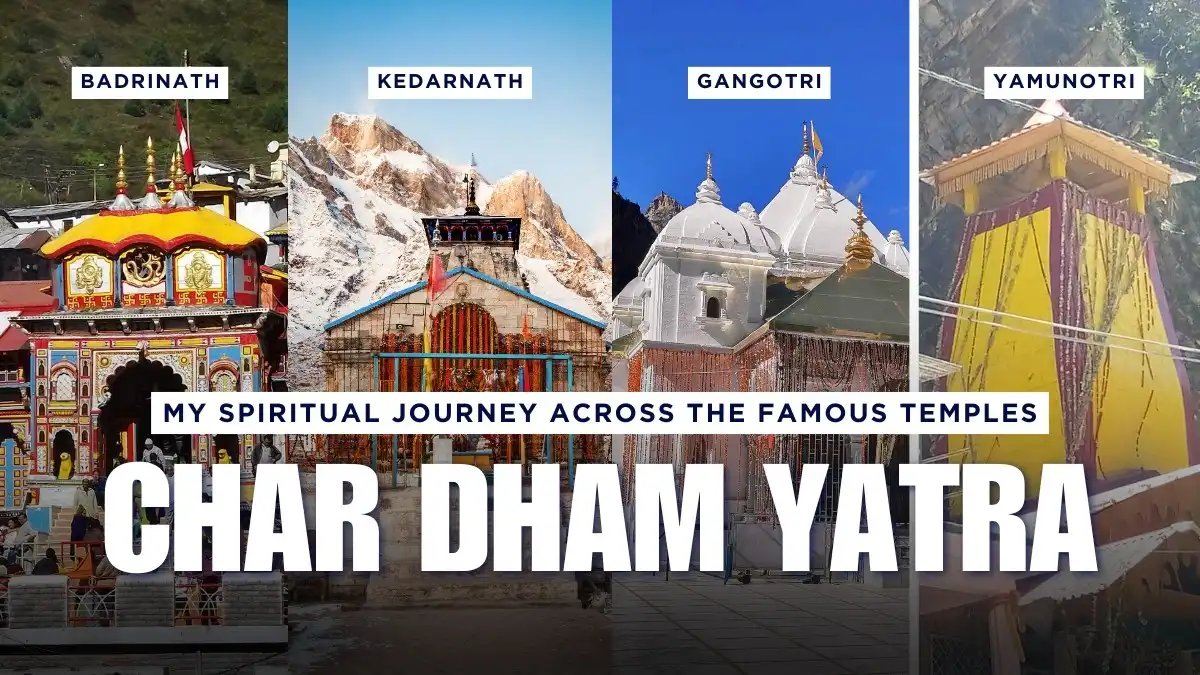
A properly designed itinerary ensures a smooth and spiritually meaningful journey. The total duration of the Delhi to Char Dham route is around 12 days, covering nearly 1400 km.
The complete route map is:
Delhi → Haridwar → Barkot → Janki Chatti → Yamunotri → Uttarkashi → Gangotri → Rudraprayag → Gaurikund → Kedarnath → Gaurikund → Rudraprayag → Badrinath → Rishikesh → Delhi
Day 1: Delhi to Haridwar (220 km / 6 hours)
Start early because the main road stays crowded with locals, trucks and pilgrims. The journey normally takes around six hours. During peak season, delays due to congestion are common. After reaching Haridwar, check into your hotel and take some rest. In the evening, go to Har Ki Pauri to watch the famous Ganga Aarti. If you have time, visit Bharat Mata Mandir.
Day 2: Haridwar to Barkot (180 km / 7 hours)
Start your trip early to skip heavy traffic along the Rishikesh highway. After Rishikesh, the roads become steep and narrow. Take a brief stop at Kempty Falls while traveling on the Mussoorie route. The final section towards Barkot is steep and physically exhausting. Barkot has basic stay options, so keep your expectations simple.
Day 3: Barkot to Yamunotri and Back (36 km drive + 6 km trek)
Drive from Barkot to Janki Chatti, which is the final motorable point. From here, a 6 km trek leads to Yamunotri. If you are not comfortable walking uphill, hire a pony or palanquin. The Yamunotri temple closes for a short break at around 2 PM, which many visitors do not know, so start the trek early.
Before the darshan, take a dip at Surya Kund. The boiling water here is also used to prepare prasad by cooking rice in a cloth. After completing prayers, trek back to Janki Chatti and then continue your journey to Barkot.
Day 4: Barkot to Uttarkashi (90 km / 4 hours)
Leave Barkot after breakfast and head towards Uttarkashi. The roads include repeated curves and narrow paths. Visit the ancient Vishwanath Temple, which is considered older than the one in Varanasi. Many people skip the Nehru Institute of Mountaineering, but it is an interesting stop for travellers
Day 5: Uttarkashi to Gangotri and Back (200 km / 8 hours)
Begin early, as the road to Gangotri often experiences landslides. On the way, stop at Harsil, known for its apple orchards and peaceful surroundings. After reaching Gangotri, take a holy dip in the icy water of the Bhagirathi River.
Day 6: Uttarkashi to Guptkashi (220 km / 9 hours)
The route from Uttarkashi to Guptkashi is long and demanding. Take a short break at Tehri Dam, yet don’t spend too much time since the journey is tiring. Myth says Lord Shiva stayed here before appearing at Kedarnath. Lodging in Guptkashi is basic and limited.
Day 7: Guptkashi to Kedarnath (30 km drive + 16 km trek)
Leave early to reach Gaurikund, the final motorable spot before Kedarnath. The 16 km trek from here is the most difficult part of the whole Yatra. If trekking is difficult, hire a pony or palki. Helicopter services are also available from Phata, but advance booking is essential. Explore the temple and surrounding places, including Pandava Gufa, and return to Uttarkashi before evening arrives.
Day 8: Kedarnath to Guptkashi (16 km trek + 30 km drive)
Wake up early and participate in the morning aarti. After darshan, begin your descent to Gaurikund. The natural hot springs here have healing properties, but many travellers overlook them. From Gaurikund, return to Guptkashi and rest for the evening.
Day 9: Guptkashi to Badrinath (200 km / 8 hours)
Leave early since the journey on this route is long. Pass through Chopta, often called Mini Switzerland. Stop at Joshimath, the winter home of Lord Badrinath, at the Narasimha Temple. Many devotees skip this important shrine.
Reach Badrinath in the evening. Before darshan, take a dip in Tapt Kund, a natural hot spring believed to purify the body. Participate in the lovely evening aarti.
Day 10: Badrinath to Rudraprayag (160 km / 6 hours)
In case you missed the morning rituals, visit the temple again early. Explore Mana Village, the final Indian village near Tibet. See Bhim Pul and Vasudhara Falls. After sightseeing, drive to Rudraprayag, noted for the Alaknanda and Mandakini rivers’ confluence. This location is famous for the Man-eating Leopard that Jim Corbett hunted.
Day 11: Rudraprayag to Rishikesh (140 km / 5 hours)
Travel to Rishikesh, known globally for yoga and spiritual learning. Visit Ram Jhula and Laxman Jhula. Check out the Beatles Ashram if you want a unique experience. Rishikesh is also ideal for river rafting. Do not miss the evening Ganga Aarti at Triveni Ghat.
Day 12: Rishikesh to Delhi (240 km / 6 hours)
Now you are on the last leg of your journey. Travel back to Delhi with life-changing experiences. Char Dham is not just a pilgrimage but a deep spiritual and natural journey linking you with the Himalayas and India’s heritage.
If you have booked a GMVN package from Haridwar, you can easily reach Haridwar from Delhi by road.
Best Time to Do Char Dham Yatra
The ideal time to begin the Yatra is from May to June or September to early October. The temples open in late April or early May, depending on the declarations. May and June offer comfortable weather, but these months are crowded.
July to early September should be avoided due to monsoon, landslides and road closures.
Many experienced travellers prefer September and early October because the weather becomes pleasant, crowds reduce, and the landscapes look fresh after the monsoon. October also aligns with many Hindu festivals, which add more charm to the Yatra.
Char Dham Yatra 2026 Registration
For the safety and monitoring of pilgrims, registration is mandatory. It can be done online through the Uttarakhand Tourism official site, and you will get an e-pass once your details are filled in. Offline registration is available in Haridwar, Rishikesh and Sonprayag. Keep a government ID, photographs and a medical fitness certificate ready. Biometric registration is required at some points as well. It helps authorities track movements in case of emergencies. Registration is free, so avoid agents who charge money for it. RFID tags have also been introduced for better monitoring of pilgrims.
Book Tempo Traveller from Us for Chardham Yatra Trip

Make your Chardham Yatra trip completely stress-free and comfortable by hiring a Tempo Traveller for Chardham Yatra at actempotravellerhire.com. Whether traveling with family or friends, our clean and spacious vehicles offer a smooth, safe, and unforgettable journey through the Himalayas. For all questions and bookings, dial +91-9811406024 to plan your Chardham Yatra with no hassle at all.
Conclusion
If you are planning a pilgrimage this season plan and book early through us for better availability. You can take complete packages including registration, meals, hotels, transport, and sightseeing for an easy spiritual journey.
For groups, Char Dham Yatra packages are highly recommended. For 2–6 travelers, fixed departure packages from Delhi are also available, which help reduce per-person cost. This pilgrimage is not only about visiting temples—it is about experiencing the Himalayan energy, learning patience, and feeling the spiritual heritage of India.
FAQs Chardham Yatra 2026
How can I book a Tempo Traveller for Chardham Yatra?
Book your trip online at actempotravellerhire.com or contact +91-9811406024 for instant bookings and questions.
What is the cost of hiring a Tempo Traveller for the Hardham Yatra?
Costs depend on vehicle size, journey duration, and travel route, ranging between ₹90,000 and ₹1,20,000 for the complete Chardham Yatra.
How many passengers can a Tempo Traveller accommodate?
Based on the model, it can carry between 9 and 17 people comfortably, including space for luggage.
Are the Tempo Travellers comfortable for long Himalayan drives?
Yes, the vehicles are spacious, properly maintained, with reclining seats and air conditioning for smooth, fatigue-free long-distance travel.
Will a driver be available with the Tempo Traveller?
Yes, an expert, trained, and polite driver who knows Himalayan roads is provided for the entire journey.
Can I customize the itinerary while hiring a Tempo Traveller?
Yes, you can adjust pickup points, stops, and timings according to your requirements for a flexible Chardham Yatra trip.
How do I contact for emergency or support during the trip?
You can contact +91-9811406024 anytime for nonstop support regarding bookings, travel issues, or emergencies during the trip.
Can senior citizens travel safely in a Tempo Traveller?
Yes, it ensures a safe, pleasant, and easily reachable journey, suitable for senior devotees on the Chardham Yatra.