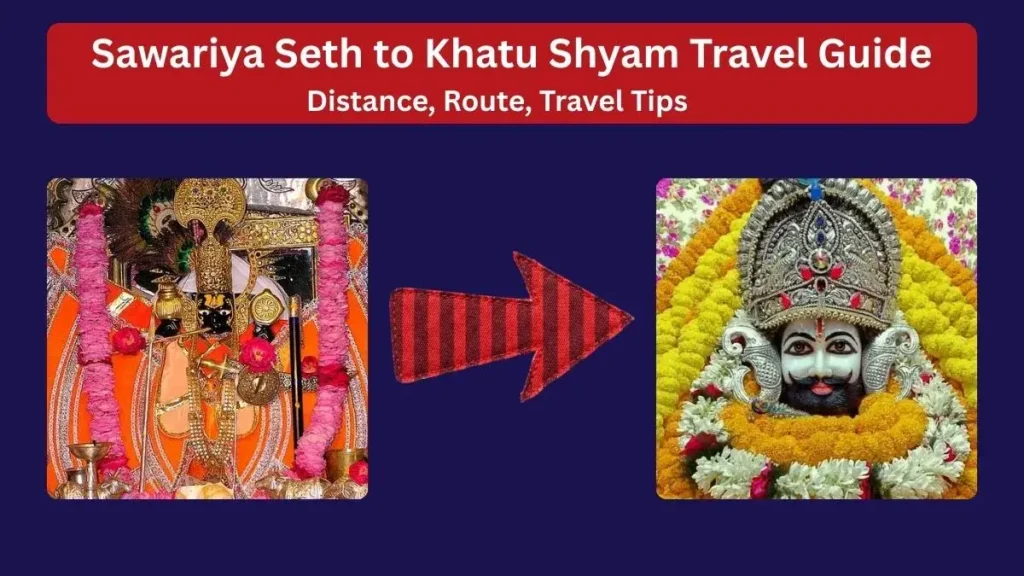
The State of Rajasthan, apart from being a land of forts and Palaces, has a very spiritual side as well. Some of the important temples of this state include the Sawariya Seth Temple, located at Chittorgarh, and the Khatu Shyam Ji Temple at Sikar. These two places are often clubbed together as one would want to seek the blessings of Lord Krishna in two of his most unique forms.
This guide offers an exhaustive overview of all there is to know before planning a smooth trip from Sawariya Seth to Khatu Shyam.
Distance from Sawariya Seth to Khatu Shyam by Road
The distance from Mandaphia, the place of residence of Sawariya Seth, to Khatu Shyam Ji covers a considerable portion of the heart of Rajasthan territory.
Key Distance Metrics:
Total Distance: Approximately 370 km via the most direct route involving highways.
Travel Time: It takes approximately 7 to 9 hours depending upon the time you take for your breaks.
Road Condition: This route comprises National Highways (NH 48 and NH 58). Both are excellent roads with multiple lanes. There are toll booths at regular intervals, but the smooth asphalt allows you to drive at a good speed.
The journey takes you through the change from the hilly region of Mewar approaching Chittorgarh to the relatively flat, semi-arid Shekhawati region.
Best Route from Sawariya Seth to Khatu Shyam
The Primary Route: Via NH 48 (The Expressway Route)
This is the fastest and most reliable path. It bypasses major city congestion while providing access to high-quality amenities.
Departure from Mandaphia: Start early to exit the Mandaphia-Chittorgarh local roads before local school and work traffic begins.
Bhilwara Bypass: You will head north toward Bhilwara. Use the bypass to avoid city traffic.
Nasirabad and Kishangarh: Following the highway toward Ajmer, you will reach the Kishangarh marble belt. This area is famous for its white landscape created by marble slurry.
Jaipur Ring Road: Instead of entering Jaipur city, take the 200 Feet Bypass or the Ring Road. This saves at least 90 minutes of travel time.
Reengus to Khatu: From the Jaipur-Bikaner highway, you will take a turn at Reengus. The final 17 km stretch leads directly to the Khatu Shyam Ji temple town.
Alternative Routes
Via NH 52 (The Tonk Route): This route takes you through Bhilwara, then shifts toward Tonk before hitting Jaipur. While the road is decent, it is generally preferred only if there is a major blockage on the NH 48.
The State Highway Route: For those who enjoy rural scenery, some travelers take the interior roads through small villages. However, these roads are narrow, often have speed breakers, and lack good restaurants or emergency services.
How to Reach Khatu Shyam from Sawariya Seth
By Road
Most pilgrims prefer road travel because the temples are located in small towns rather than major city centers.
Private Car: The most flexible option of all is to travel by private car. One can control the speed of travel and make stops at mid-way destinations like Ajmer and Pushkar if one wants to include another spiritual experience.
Tempo Traveller: For extended families or “Satsang” groups, a Tempo Traveller is the most practical vehicle. It allows the group to travel together, share stories and bhajans, and significantly reduces the per-person cost. Most Ac Tempo Travellers come with overhead carriers for luggage, keeping the seating area spacious. We also provide Tempo Traveller Services in Jaipur.
Buses: Rajasthan State Road Transport Corporation (RSRTC) operates buses from Chittorgarh to Jaipur. From Jaipur, you can catch a local “Low Floor” or private bus to Reengus/Khatu.
By Train
While there is no direct “Temple-to-Temple” train, the rail network is a reliable secondary option.
Step 1: Travel from Mandaphia to Chittorgarh Junction (40 km by taxi).
Step 2: Board a train to Jaipur Junction or Reengus Junction. The Udaipur-Jaipur Intercity or the Chetak Express are popular choices.
Step 3: Reengus is the railhead for Khatu Shyam. From Reengus, hundreds of shared autos, jeeps, and buses ply to the temple every few minutes.
By Air
This is the most expensive and least direct method, but it is the fastest for those coming from outside Rajasthan.
Fly from Udaipur to Jaipur: After visiting Sawariya Seth, drive to Udaipur Airport (90 km). Take a short flight to Jaipur.
Onward Journey: From Jaipur Airport, hire a pre-paid taxi directly to Khatu Shyam (approx. 2.5 hours).
2-Day Pilgrimage Trip from Sawariya Seth to Khatu Shyam
A two-day itinerary is the minimum required to do justice to both shrines without feeling exhausted.
Day 1 – Sawariya Seth Temple Darshan
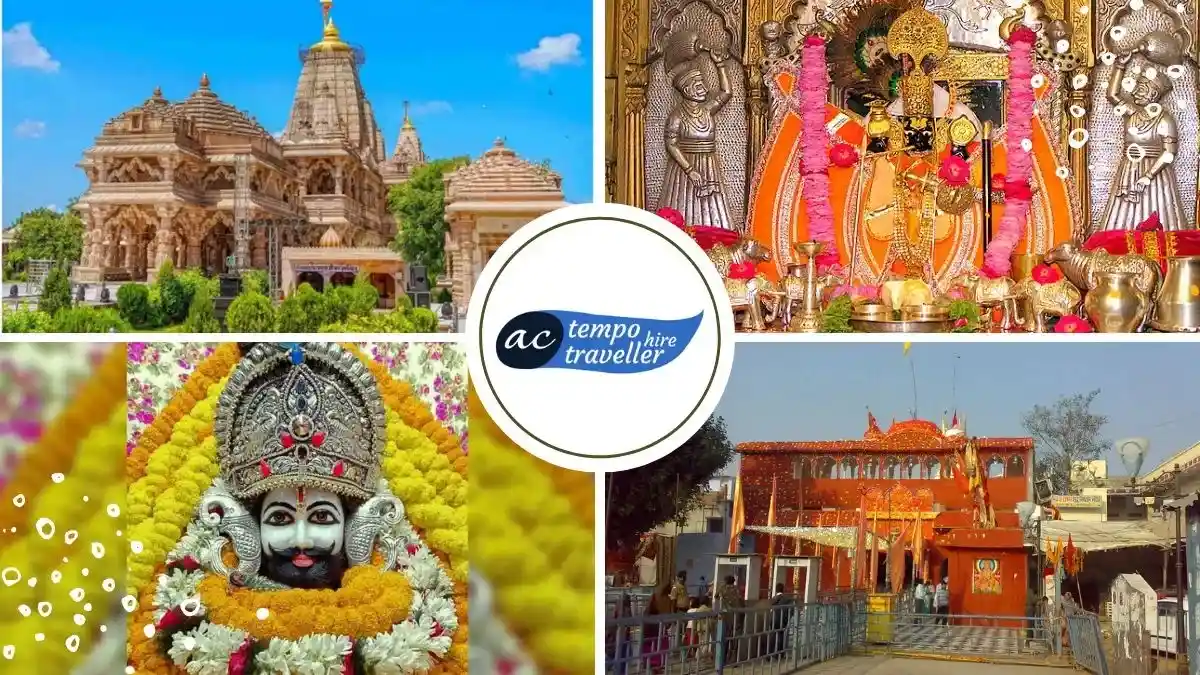
09:00 AM: Arrival at Mandaphia. The temple is that of Lord Krishna, who is also called the “Merchant of Merchants” or Sawariya Seth.
11:00 AM – Take part in the Rajbhog Aarti. This is a grand ritual where food is offered to the deity. The silver-plated doors and the intricate glass work of the temple can be enjoyed in the daylight.
01:00 PM: Visit the “Old Sawariya Seth Temple” located nearby, which is smaller but offers a very serene environment.
04:00 PM: Start your local explorations or visit Chittorgarh Fort if time allows.
08:00 PM: Visit the evening Shringar Aarti ceremony. Spend the night at Mandaphia to enjoy the vibes.
Day 2 – Travel to Khatu Shyam and Darshan
05:00 AM: Check-out and start the journey. Early starts are important on long Rajasthan routes, as they help avoid the mid-day sun.
09:00 AM: Breakfast stop near Kishangarh. Plenty of “Dhabas” are available with fresh Parathas and tea.
12:30 PM – Arrive Khatu Shyam Ji. Check in to your hotel and have a quick break.
04:00 PM: Go to the temple. The walk from the parking to the temple goes through a colorful bazaar.
06:00 PM: Queue for Darshan. At Khatu Shyam, Darshan is in a moving line. You will get a few seconds to see the “Sheesh” (head) of Baba Shyam.
08:00 PM: Visit the Shyam Kund, where the head of Barbarika was found. Holy dip is taken here.
Best Time to Visit Sawariya Seth and Khatu Shyam
The timing of your visit can drastically change your experience.
Seasonal Considerations
Winter (October to March): This is the peak season. The weather is cool and pleasant for standing in long queues. The temperatures range from 10°C to 25°C.
Summer (April to June): Temperatures can soar to 45°C. The stone floors of the temples become very hot. If you visit now, go for early morning or late evening darshan.
Monsoon (July to September): The landscape turns green, and the drive becomes beautiful. However, occasional heavy rains can slow down road travel.
Festival Peaks
Phalguna Mela (Khatu Shyam): Usually in March, this is the biggest fair. Millions of devotees walk from Reengus to Khatu. Avoid this time if you dislike massive crowds.
Janmashtami (Sawariya Seth): Celebrated with great pomp. The temple is decorated with flowers and lights.
Accommodation Options Near Sawariya Seth and Khatu Shyam Temple
Near Sawariya Seth Temple
Mandaphia is a small town that revolves around the temple.
Temple Trust Dharamshalas: These are well-maintained, offer basic amenities, and are very close to the main gate.
Sanwaliya Ji Guest Houses: Numerous private guest houses have opened up recently, offering AC rooms and attached bathrooms.
Bhilwara/Chittorgarh: If you prefer luxury hotels, you might stay in Bhilwara or Chittorgarh city and drive to the temple in the morning.
Near Khatu Shyam Temple
Standard Hotels: The majority of the hotels are located on Reengus Road and near the town of Khatu. Some of the prominent hotels include: Hotel Lakhdatar, Hotel Shyam Palace, and Hotel Mandawa Haveli. These are comfortable, have hot water facilities, neat rooms, and serve vegetarian dishes.
Dharamshalas: There are also several community-run dharamshalas that are present in close proximity to the temple. Some of the most popular dharamshalas are Aggarwal Dharamshala, Marwari Dharamshala, Bikaner Dharamshala.
Resorts: For those tourists who like to relax during their tour by staying at a peaceful location away from crowded places, there are a few resorts available at the outskirts of Sikar. Such options are Royal Rajasthan Resort and Hotel Park Avenue.
Travel Tips for a Hassle-Free Journey
Safety Tips
Crowd Management: On Ekadashi (the 11th day of the lunar fortnight), the crowd at Khatu Shyam is immense. If you have elderly family members, avoid Ekadashi dates.
Hydration: Rajasthan is dry. Even in winter, keep drinking water to avoid dehydration.
Driving at Night: Beware of cattle crossing the road. National highways have fences in some places, while roads passing through villages do not. Also, high beam headlights of upcoming trucks can cause problems.
Temple Etiquette
Dress Code: There is no fixed dress rule, but visitors should wear decent Indian clothes. Men usually wear kurta pyjama or simple trousers. Women commonly wear saree or salwar kameez.
Offerings: Local shops sell flowers, prasad, and nishan. Buy items only from these shops. Do not trust people who offer faster darshan for money. Always stand in the official queue.
Mobile Phones: It is normally not a problem to carry a mobile phone into the temples. However, do not take photographs or videos of the deity. Be careful while following the regulations to avoid problems with the security personnel.
Understanding the Deities: A Brief History
To make it a more meaningful pilgrimage, it would be helpful to have an idea of the importance of these temples.
Sawariya Seth (The Dark Lord)
The idol of Sawariya Seth was discovered in 1840 by a milkman named Bhola Ram Gurjar. He had a dream about three idols buried underground. Upon digging, three beautiful black stone idols of Lord Krishna were found. The largest one is at Mandaphia, which has now become a grand temple. He is considered the “Seth” or the supreme banker. Many businessmen donate a percentage of their profits here, considering him a partner in their business.
Khatu Shyam (The Sacrifice)
Khatu Shyam is the name given to Barbarika, the grandson of Bhima. He possessed three infallible arrows and intended to join the Mahabharata war. Krishna, knowing Barbarika’s power could end the war in a minute, asked for his head as a sacrifice. Barbarika obliged, and in return, Krishna blessed him that in the Kali Yuga, he would be worshipped in Krishna’s own name (Shyam). He is known as Haare Ka Sahara (The Support of the Defeated).
Conclusion
The travel from Sawariya Seth to Khatu Shyam is not an ordinary road trip. It is a spiritual pilgrimage that covers two major temples. If you plan your routes via NH 48 and use an appropriate vehicle like a tempo traveler to make the group travel easy, the trip can be completed without any issues. If you travel during the cooler season, you can even avoid heat and travel stress. So, with appropriate planning, this spiritual pilgrimage is completed smoothly.